
The Ultimate Guide to Welcoming Your Newborn with Gratitude and Blessings
The birth of a child is one of the most profound blessings a family can experience. To celebrate this joyous occasion, the Prophet Muhammad (peace be upon him) established a highly recommended Sunnah. Understanding the practice of Aqiqah in Islam is essential for every Muslim parent.
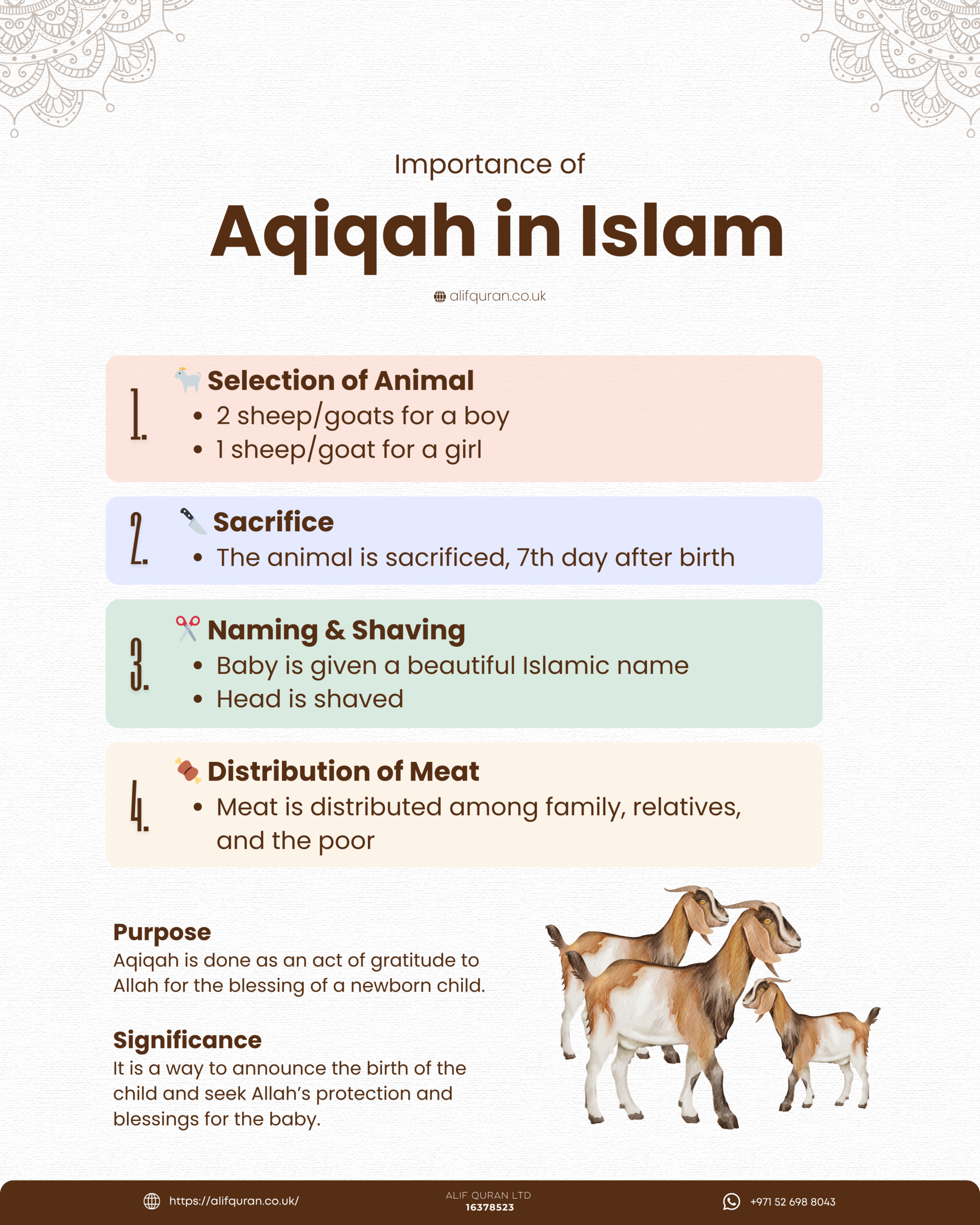
The primary Purpose of the Aqiqah is to perform an act of immense gratitude to Allah (SWT) for the blessing of a newborn child. It is a moment of deep spiritual reflection and thankfulness.
Furthermore, the Significance of this beautiful tradition goes beyond a simple family dinner. It is a public way to gracefully announce the birth of the child to the community. More importantly, as mentioned in authentic narrations found on Sunnah.com, it is a spiritual means to seek Allah's absolute protection and lifelong blessings for the baby.
To perform this Sunnah correctly, there is a specific methodology that has been passed down for centuries. Here are the four foundational pillars of performing the Aqiqah in Islam:
The first step involves choosing a healthy, unblemished livestock animal. According to the Sunnah, the requirement is 2 sheep or goats for a boy, and 1 sheep or goat for a girl. This distinction is based entirely on the explicit guidance of the Prophet ﷺ.
Timing is a crucial element. The animal is officially sacrificed on the 7th day after birth. If the 7th day is missed due to unforeseen hardships, scholars advise performing it on the 14th or 21st day, preserving the rhythm of sevens.
On this same auspicious 7th day, the baby is given a beautiful, meaningful Islamic name. Following the naming, the baby's head is gently shaved. It is a highly rewarded tradition to weigh this shaved hair and give its equivalent weight in silver or gold as charity to the poor.
Unlike regular meals, the meat from the sacrifice has a specific social purpose. The cooked or raw meat is generously distributed. Traditionally, it is divided into thirds: one portion for the family, one portion for relatives and friends, and a mandatory third portion reserved strictly for the poor and needy.
How do modern families in Australia and across the globe manage these traditions? Read our expert advice below.
Final Reflection: Welcoming a child into the world is a momentous occasion. By practicing the Aqiqah in Islam, you are not only feeding your community and giving charity, but you are wrapping your precious newborn in the protective prayers of the Prophet ﷺ. May Allah bless your children, make them righteous, and make them the coolness of your eyes. Ameen.