

A simple, comprehensive guide to one of the most powerful supplications in Islam, explained for parents and students alike.
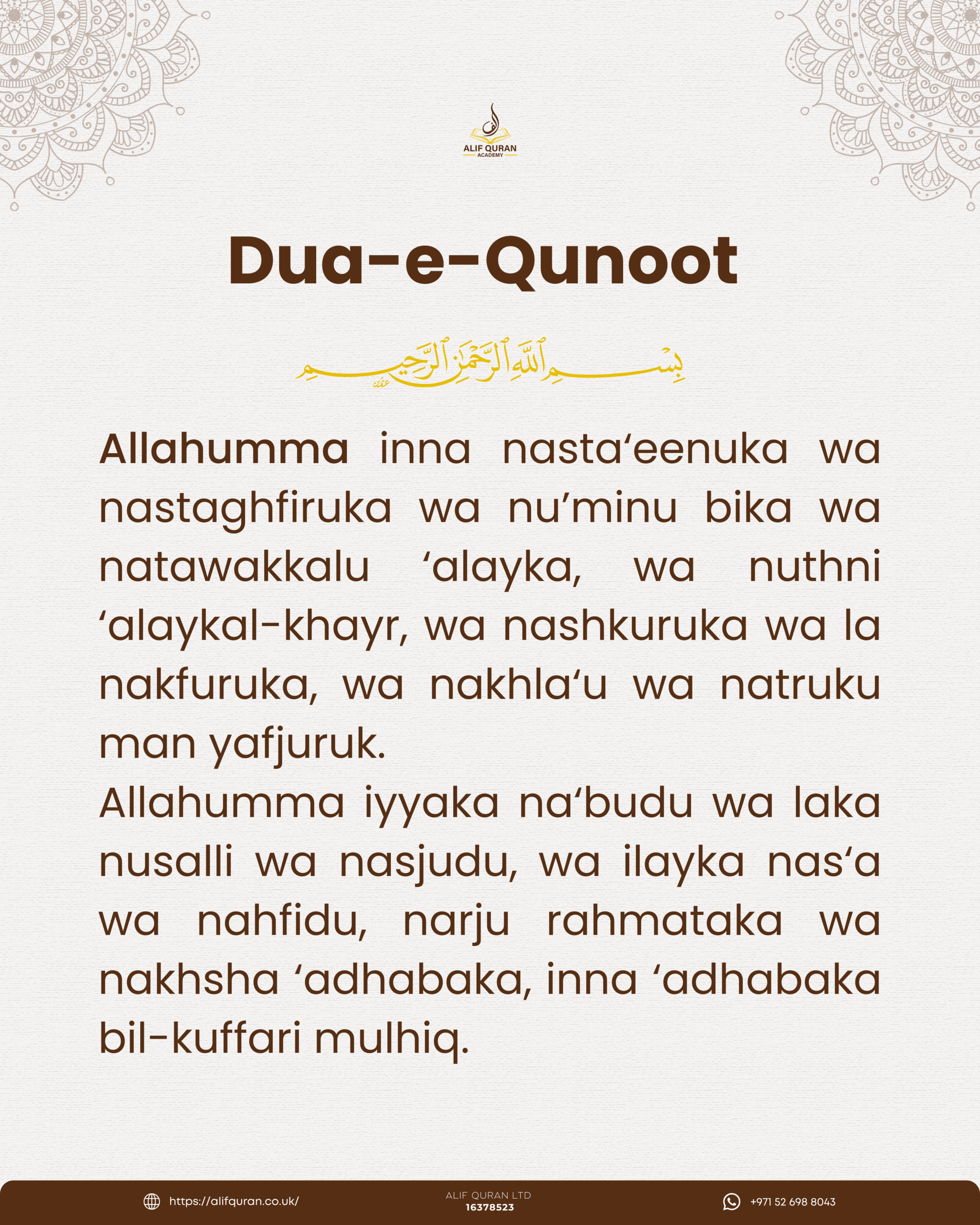
When learning how to pray, one of the most beautiful and important supplications a Muslim learns is Dua e Qunoot. However, because it is a longer dua, and because different Islamic schools of thought recite it at different times, parents often have many questions.
Whether you are seeking to refresh your own knowledge, or you are looking for ways to teach this dua to your child, understanding its meaning brings deep peace to our daily worship. As a dedicated Special Needs Quran Academy serving families across the globe, we believe in making Islamic education simple and accessible for every mind.
In Arabic, the word "Qunoot" translates to "being obedient," "standing in reverence," or "devotion." Dua e Qunoot is a special supplication made while standing during the prayer (Salah).
"Allahumma inna nasta’eenuka wa nastaghfiruka wa nu’minu bika wa natawakkalu ‘alayka..."
(O Allah! We seek Your help and ask for Your forgiveness, and we believe in You and have trust in You...)
It is a powerful prayer where we declare our absolute reliance on Allah, ask for His guidance, and seek refuge from His punishment. It is a moment of deep, personal connection with our Creator.
One of the most common questions we receive is about when to actually recite this dua. You may have noticed some people reading it at night, while others read it early in the morning. Both practices are correct and have deep roots in Islamic tradition.
For the majority of Muslims (particularly those following the Hanafi school of thought), Dua e Qunoot is recited every single night during the Witr prayer, which is the final prayer offered after Isha. It is read in the third Rak'ah before going down into Ruku (bowing).
Other Islamic schools (such as the Shafi'i and Maliki schools) regularly recite a version of Qunoot during the morning Fajr prayer. During times of great hardship facing the Muslim community, the Prophet (PBUH) would recite Qunoot e Nazilah to ask Allah for protection.
Sometimes, people say, "You don't have to read it, it isn't mandatory." This causes confusion. Here is the simple breakdown of its legal ruling based on scholarly consensus:
For those who claim it is not from the tradition of the Prophet (PBUH), the Hadith literature provides clear evidence:
Because Dua e Qunoot is a longer Arabic text, it can feel overwhelming for children, especially those with Autism, ADHD, or special educational needs (SEN). Memorizing long paragraphs can trigger anxiety or sensory fatigue.
At Alif Quran, our specialized tutors do not force rote memorization. Instead, we use gentle, neurodivergent-friendly strategies: