

The Ultimate Prophetic Prayer for Complete and Unconditional Forgiveness
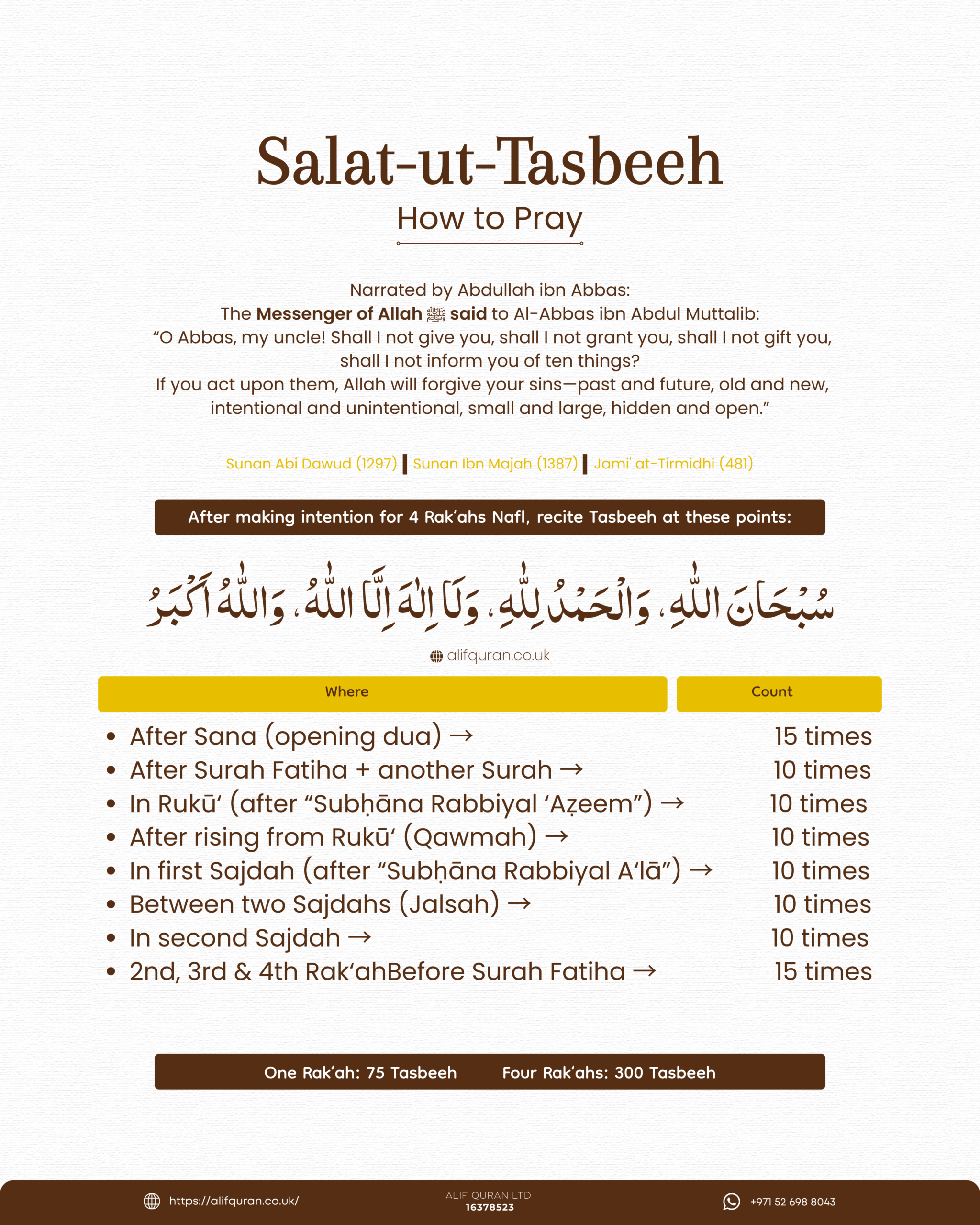
Every believer commits sins, both intentionally and by mistake. However, Allah's mercy is far greater than any mistake a human can make. To access this profound level of divine forgiveness, the Prophet Muhammad (ﷺ) gifted his Ummah a very specific, miraculous prayer known as Salat-ut-Tasbeeh.
This magnificent prayer is not part of the mandatory daily obligations, but it carries a reward so massive that the Prophet ﷺ urged his beloved uncle to perform it regularly.
Narrated by Abdullah ibn Abbas, the Messenger of Allah (ﷺ) said to Al-Abbas ibn Abdul Muttalib:
“O Abbas, my uncle! Shall I not give you, shall I not grant you, shall I not gift you, shall I not inform you of ten things? If you act upon them, Allah will forgive your sins—past and future, old and new, intentional and unintentional, small and large, hidden and open.”
This incredibly powerful guarantee is recorded authentically across major collections, including Sunan Abi Dawud (1297), Sunan Ibn Majah (1387), and Jami' at-Tirmidhi (481). Performing Salat-ut-Tasbeeh is like washing your soul completely clean of a lifetime of burdens.
Unlike standard prayers, Salat-ut-Tasbeeh consists of 4 Rak'ahs (units) of Nafl (voluntary) prayer, during which a specific phrase of glorification is repeated exactly 300 times in total.
Before beginning, make the sincere intention in your heart to pray 4 Rak'ahs of Salat-ut-Tasbeeh for the forgiveness of your sins. The phrase you must memorize and recite is:
“Subhanallahi, walhamdulillahi, wa la ilaha illallahu, wallahu akbar.”
In each individual Rak'ah, you will recite this phrase 75 times. Follow this precise breakdown to ensure your count is perfectly accurate:
| Position / Action | Count |
|---|---|
| After Sana (opening dua in 1st Rak'ah) OR before Surah Fatiha (in 2nd, 3rd, 4th Rak'ah) | 15 times |
| After reciting Surah Fatiha + another Surah | 10 times |
| In Rukū‘ (after reciting “Subḥāna Rabbiyal ‘Aẓeem”) | 10 times |
| After rising from Rukū‘ (in the standing Qawmah position) | 10 times |
| In the first Sajdah (after reciting “Subḥāna Rabbiyal A‘lā”) | 10 times |
| Sitting between the two Sajdahs (Jalsah) | 10 times |
| In the second Sajdah | 10 times |
Because the structure of Salat-ut-Tasbeeh is unique, it requires deep focus. Apply these 7 practical tips to ensure your prayer is accepted and free from mistakes:
How do we overcome the common struggles associated with praying Salat-ut-Tasbeeh? Read our expert advice below.
Final Reflection: Performing Salat-ut-Tasbeeh is one of the greatest spiritual investments a Muslim can make. By taking out just 20 to 30 minutes of your time, you are securing the forgiveness of 10 different categories of sins. Schedule a quiet time this week, lay out your prayer mat, and present your heart to the Most Forgiving. May Allah accept your prayers and grant you a completely purified slate. Ameen.